Author: Rory Fox, Vice President Customer Success, DeepHow
This week, in one of Spirit Airlines' final acts before bankruptcy, Google agreed to pay $10 million for a slice of Spirit’s internal records — emails, code repositories, maintenance logs, pricing history, years of operational decisions and the outcomes that followed.
Google outbid a specialist AI data firm to acquire this data. Why is it valuable? Because these records contain exactly what AI models need and rarely have: real workflows, real decisions and the cause-and-effect relationships between them. They show what teams tried, what worked, what failed and why.
The good, the bad and the ugly are all valuable because each connects a decision to an outcome. We often say that people learn more from failure than from success. The same is true for AI. It can only learn when it has access to what was done, what happened next and why. Spirit’s records contain years of those hard-earned lessons.
Is Google’s $10 Million Payment Worth It?
For $10 million Google buys a frozen snapshot; one export, one point in time, pulled from a company that can no longer do anything with it. That snapshot can explain what happened and simulate what might have happened under different decisions. But it is still Monday-morning quarterbacking: analyzing a game that is already over. It cannot see conditions changing in the moment, decide what to do next, measure whether that decision worked, and feed the outcome into the next cycle of action and improvement. Valuable? Yes. But still limited.
That is the difference between modeling the past and learning through ongoing operations. Spirit’s records can teach a model which patterns led to which outcomes. But they cannot teach whether those lessons hold up when applied today. That knowledge only comes when a decision is put into practice, its impact is measured, and the result shapes the next decision.
Now picture that same knowledge operating as a reinforcing loop instead of a snapshot. Assess how work is being done today, act on what you find, measure the result and feed it into the next cycle. With every shift, every fix and every improvement, another lesson is captured as it happens. The knowledge and impact keeps compounding.
What Does A Reinforcing Operational Loop Deliver?
A DeepHow manufacturing partner used to assess line performance the traditional way: engineers with stopwatches and clipboards, a few times a year, weeks of analysis before anyone got an answer. This is a point in time.
DeepHow turned that into something they run on demand, on any line, any shift: assess in minutes instead of weeks, act on what's found, and measure the result on the very next run. The projected impact isn't a one-time number, it's millions of dollars a year at a single site, and tens of millions once it's running across their global footprint. That's the difference between a snapshot and a reinforcement loop: one provides a view of last quarter, the other hands you a compounding advantage every single day.
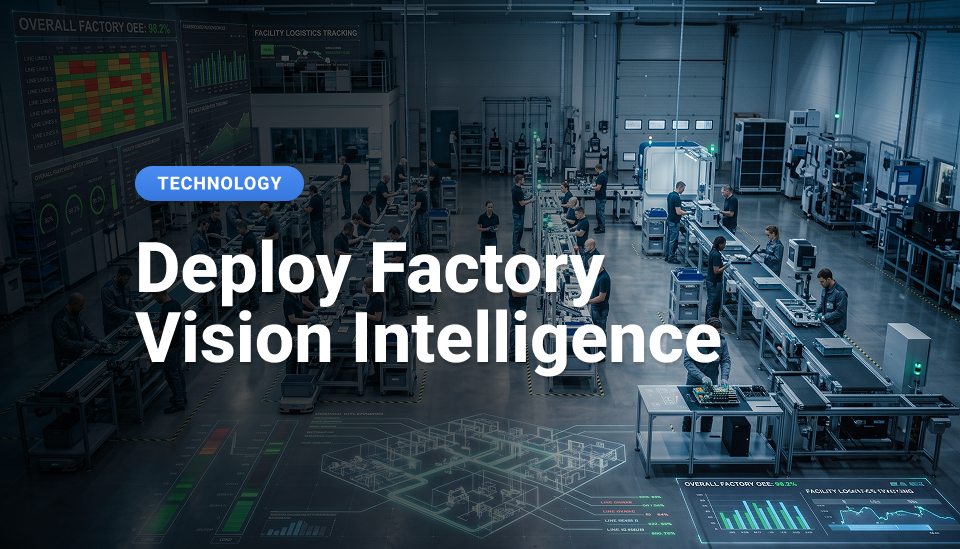
DeepHow runs the same pattern for Quality Assurance. A global electronics manufacturer using the platform moved from periodic, end-of-line QA inspection to verifying every single production cycle against the SOP and expected output, in real time. First-pass yield went up 3%. Task-level accuracy hit 99%. That's not a one-time read-out, it's continuous improvement that keeps compunding, cycle after cycle, shift after shift.
This is what DeepHow has been building the whole time.
For years, AI’s biggest wins have largely lived on screens. It has transformed marketing, analytics, content, coding, and all manner of digital work. The physical work on the floor is different. AI has struggled to reach it because almost nobody was capturing it in a form that AI could learn from. DeepHow has been doing that. Google just put a price on it.
Capturing expertise the moment it happens, verifying in real time that the standard is followed, and continuously monitoring for process improvement. That system is already running in our customers' plants today.
Spirit’s data was worth $10 million as a one-time extract. A continuously optimizing loop inside a company that is still operating is worth far more — and it starts paying back immediately.
DeepHow would rather help you build the version that compounds.
.jpg)

Start capturing, structuring, and activating your expert
knowledge today with a 14-day unlimited free trial.