Turn existing camera feeds into production flow insights. Identify emerging bottlenecks, downtime, material movement, and station imbalances so teams can act before throughput is affected.
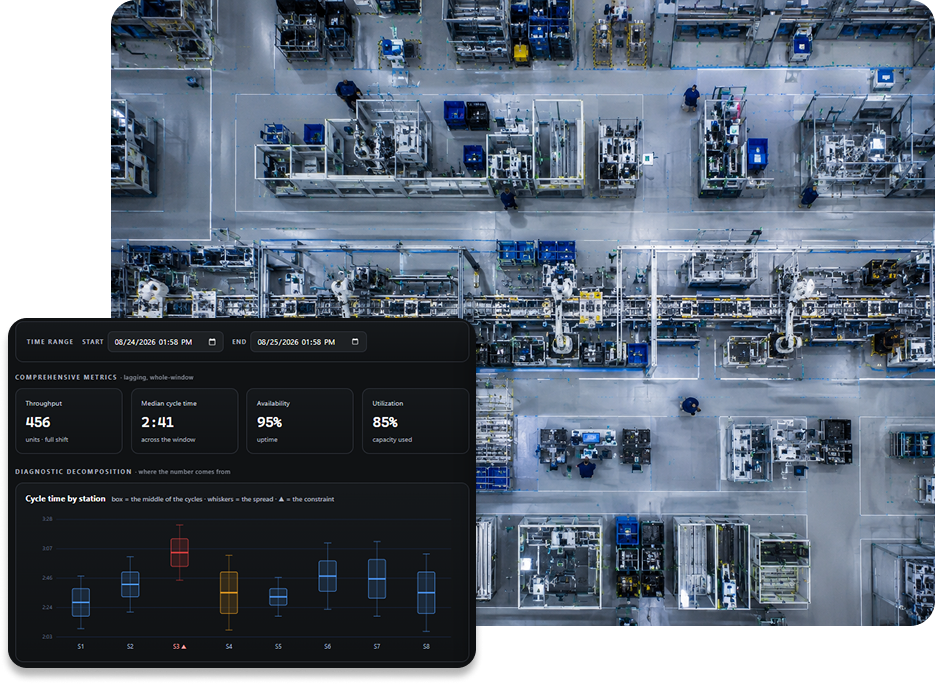
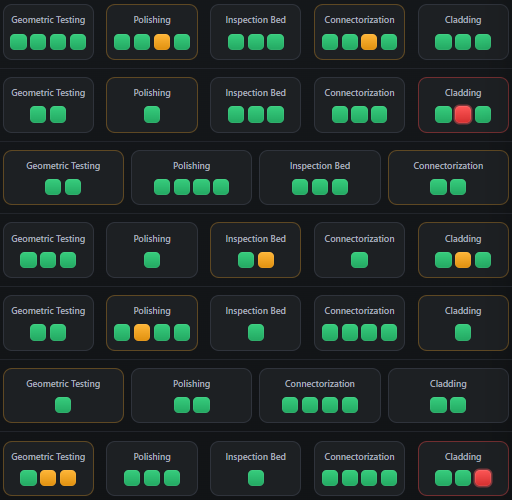
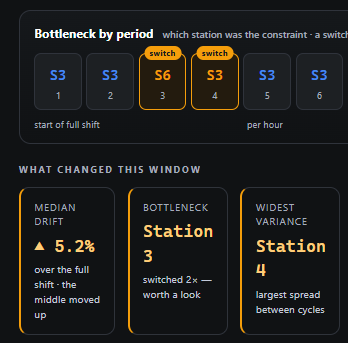
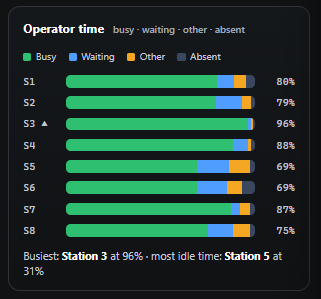
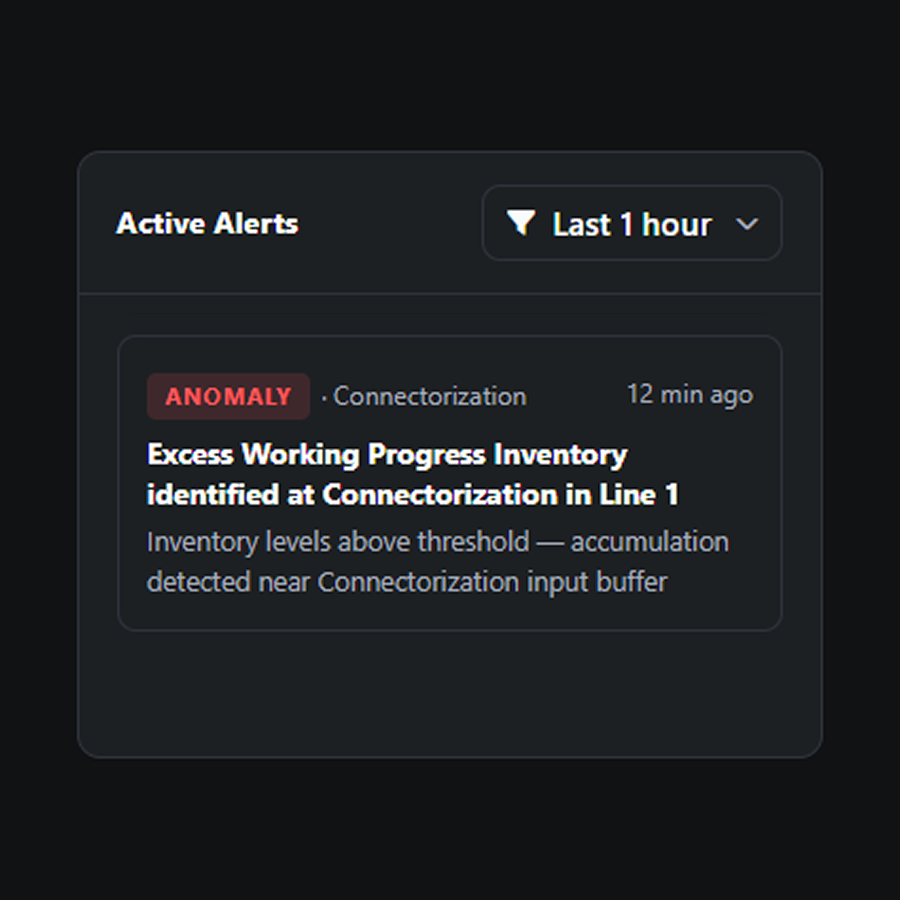
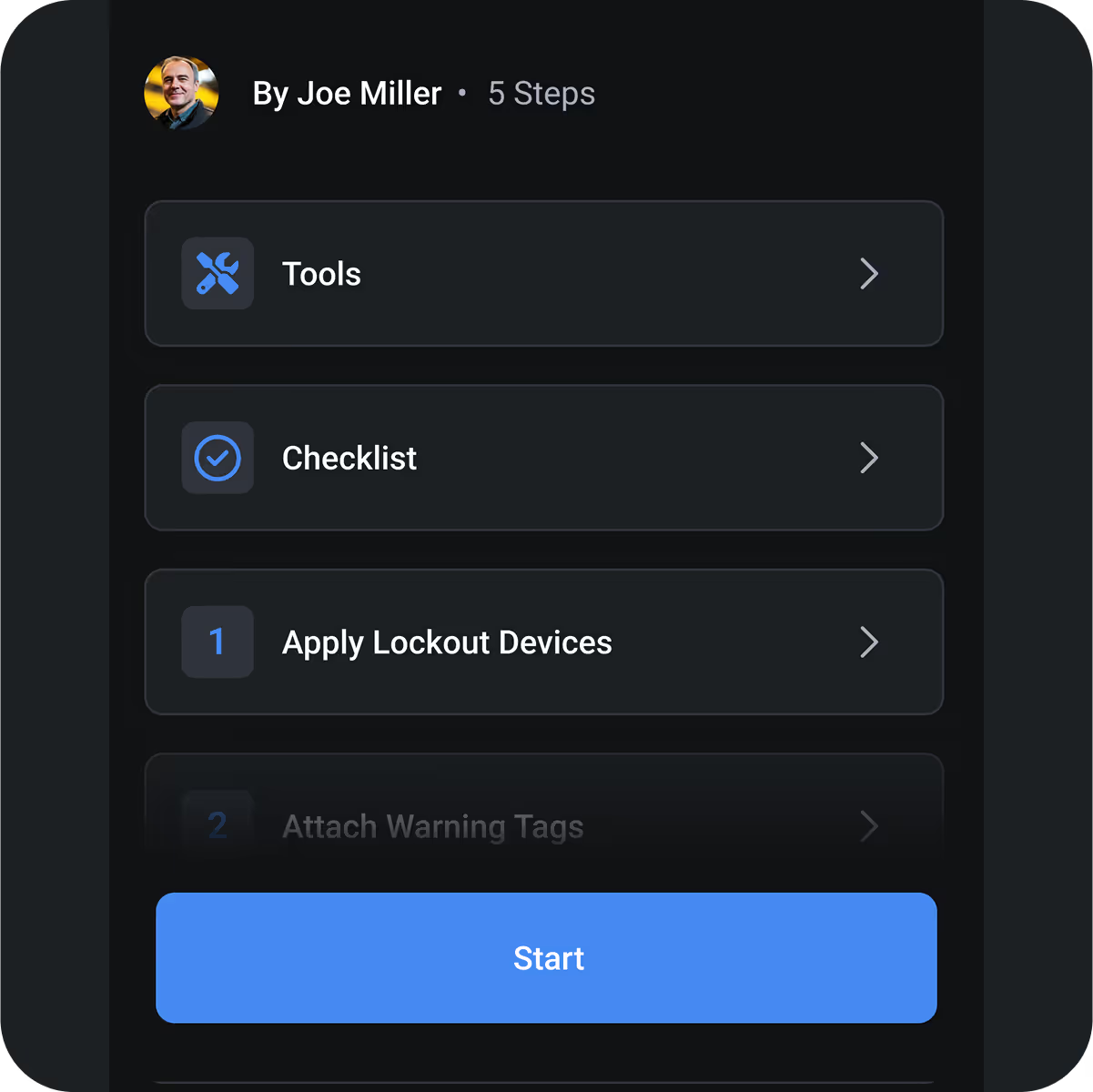
Real-time visibility to spot disruptions and understand what's impacting performance.

Anticipate blocked and starved conditions so teams can replenish materials, clear constraints, or redirect work before production stops.
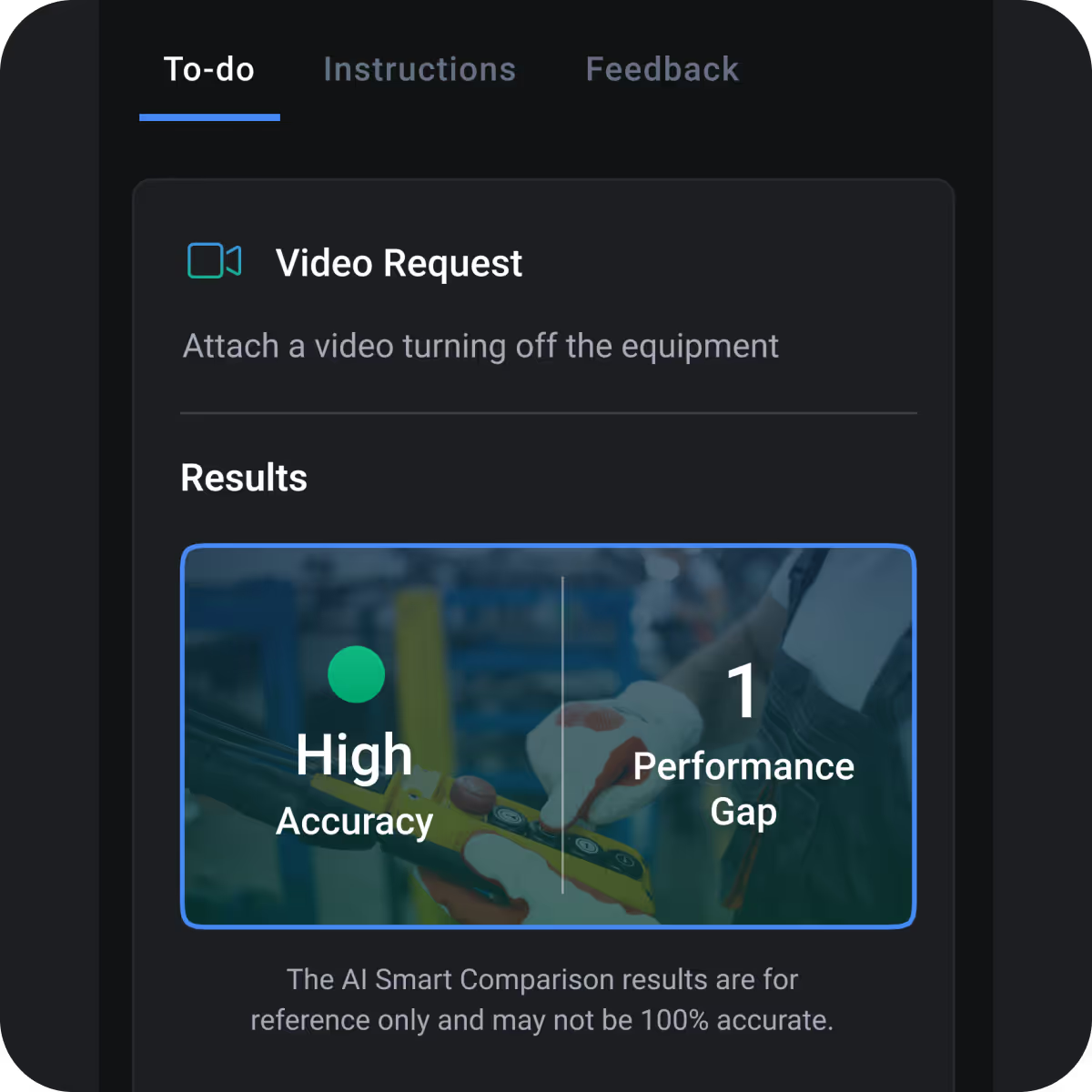
View the conditions before, during and after work stoppages, including recurring micro-stoppages.
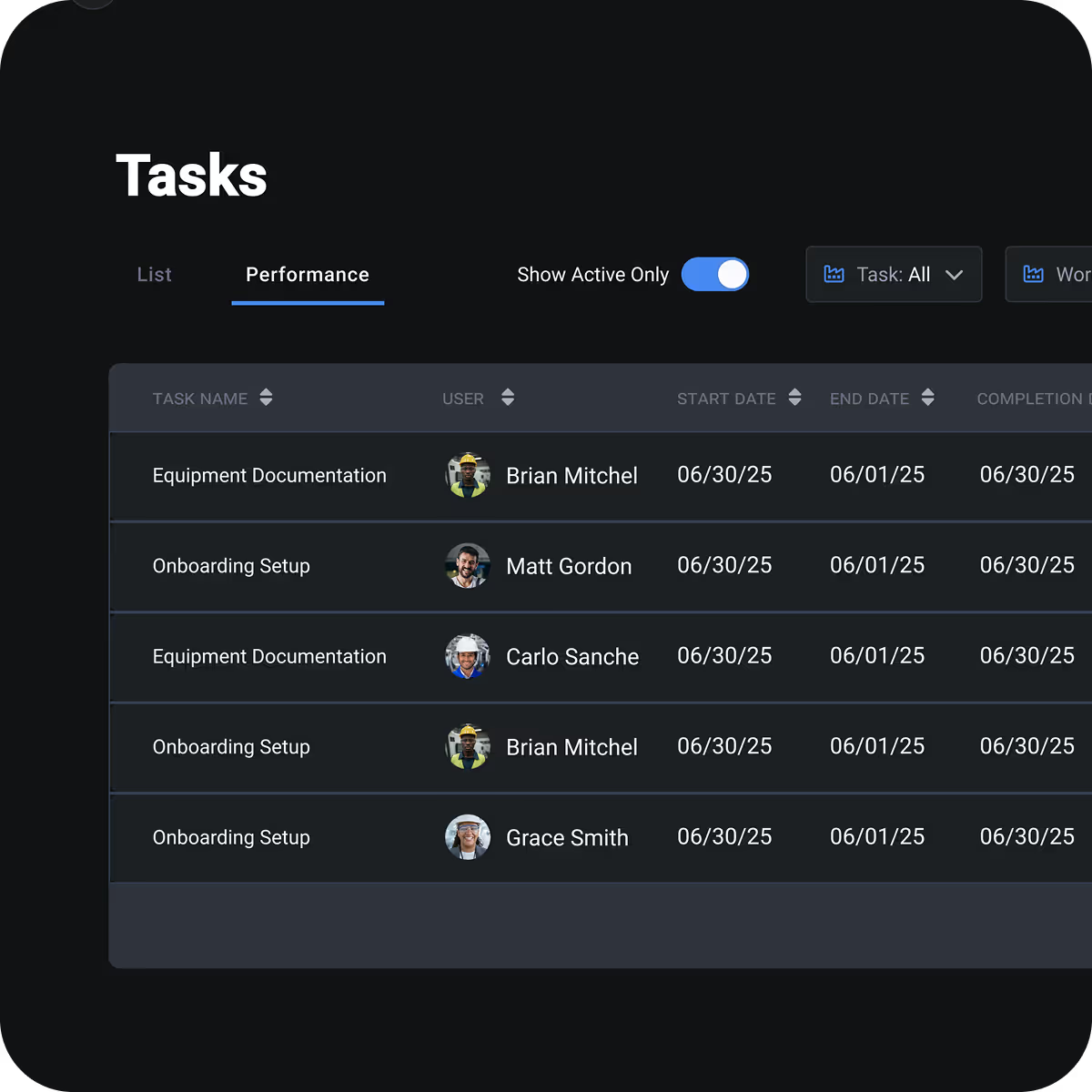
Track materials, carts, forklifts, containers, and work-in-process to improve routes, replenishment, staging, and handling.
Connect camera-based intelligence with operational data so teams can see what is physically happening behind production events.
Connect with DeepHow's Time and Motion AI and Process Drift Analysis to analyze cycle times, station activities, and workload imbalances behind bottlenecks.
Turn better methods into standardized work and use DeepHow's Live SOP Verification to confirm they are followed at the station.
Upskill operators, validate improvements, and extend successful changes across lines, shifts, and facilities through DeepHow's Knowledge Capture and Transfer.
Factory Flow Intelligence uses factory cameras and Vision Intelligence to identify bottlenecks, downtime, idle time, congestion, material shortages, and other conditions affecting production flow.
It uses AI to see and understand how work happens and how production flows across the factory floor, then guides teams toward the right action.
Not necessarily. DeepHow can work with many existing factory camera systems, depending on placement, coverage, lighting and image quality.
Yes. DeepHow supports automated facial blurring, preventing individuals from being visually identified while preserving the operational data required for analysis.
MES and SCADA show production events and machine states. Factory Flow Intelligence adds visual context showing what was physically happening around those events.
Yes. Real-time evaluation can be supported with on-premise GPU processing. Delayed processing can also support reporting and continuous improvement analysis. The right option depends on the specific use cases and business processes.

Turn factory flow insights into actions that reduce lost time, improve efficiency, and increase production output.
Request a Demo