Let’s imagine it's Monday morning at a mid-sized pharmaceutical manufacturing plant. A new technician walks onto the floor, reaches for a thick three-ring binder sitting on a dusty shelf, and flips through 47 pages of dense, single-spaced text trying to figure out how to calibrate a critical piece of equipment. The pages are dog-eared. Someone spilled coffee on page 23. And the "latest revision" sticker? It's from 2019.
Sound familiar? If you've spent any time in manufacturing, healthcare, food processing, or really any regulated industry, you've probably lived this scenario. Standard Operating Procedures SOPs are the backbone of operational consistency and regulatory compliance. But here's the uncomfortable truth: most organizations are still running on SOPs that were designed for a world that no longer exists.
The way we work has evolved, but the way we document that work hasn’t kept pace. The verification of work hasn’t kept pace either, often relying on a supervisor to check the work or relying on downstream quality checks after the work has been performed. That growing gap is quietly costing companies through avoidable errors, longer training cycles, audit issues, and the daily frustration of employees who know there’s a better way.
Here's what's often missed: driving operational excellence and delivering real operational results doesn't stop at digitizing your SOPs. It requires ensuring that processes are not only documented but consistently followed, quality-controlled, optimized over time, and actively verified at the point of work.
Here's where a lot of organizations trip up. They hear "digitize your SOPs" and think: Great, we'll scan all our paper documents into PDFs and upload them to SharePoint.
That's technically digitization. You've turned a physical document into a digital file. But let's be honest, a PDF sitting in a folder on SharePoint isn't meaningfully different from a binder sitting on a shelf. It's still static.It's still a wall of text that nobody actually wants to read.
Others think “digitizing” SOPs simply means having a better text based interface that is easier to access or read than a PDF or binder. Is that better? Yes. But still very limiting and not ensuring operations are performed correctly.
Real SOP digitization means moving from static documents to dynamic, accessible, and trackable digital content. It means your procedures live in a system where they can be versioned, searched, assigned, and measured. It means a technician on the floor can pull up the exact step they need on a tablet, in the form they want, and not flip through a binder hoping they're on the right page.
Multimodal SOPs go beyond digitization by incorporating multiple types of media and interaction into a single procedure. Instead of a 15-page text document explaining how to assemble a component, they could have:
The "multimodal" part isn't about being flashy or high-tech for the sake of it. It's about effectiveness. Research consistently shows that people retain information significantly better when it's presented through multiple channels. Want a more detailed example, check out DeepHow's Smart Instructions.
Additionally the Multimodal SOPs are situation specific. Maybe you need text, short 5 second videos and guides for a specific task. Maybe you need a 30 second refresher on a particular task. Multimodal are situational. This is the concept behind DeepHow's Smart Guide.
This shift is a response to the fact that outdated approaches are failing under modern pressures. Here's what's driving the change:
The Workforce Is Changing Fast
Experienced operators are retiring. New hires are coming in younger, more digitally native, and with different expectations about how they consume information. They grew up on YouTube tutorials and interactive apps, not three-ring binders. If your troubleshooting involves handing someone a 200-page manual and saying "read this," you're going to lose them or worse, they'll skip it and wing it on the floor.
Compliance Demands Are Tightening
Regulators aren't just asking "do you have an SOP for this?" anymore. They want to know: Who read it? When? Did they demonstrate understanding? When was it last reviewed? Which version were people trained on? Can you prove all of that? Traditional methods and documentation storage make this prohibitive.
Once your SOPs are digitized, the next frontier is ensuring they're followed in real time. AI-driven verification closes the loop between documentation and execution:
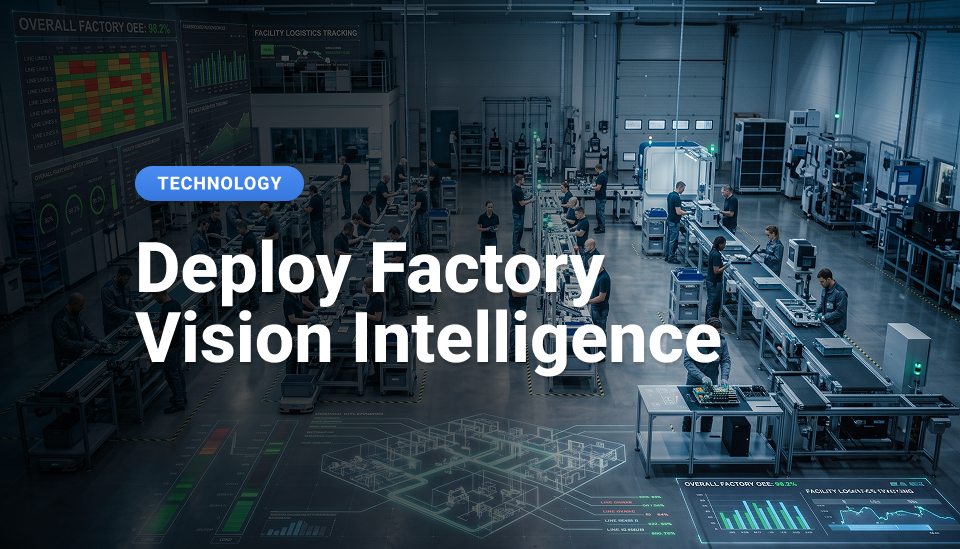
Live AI SOP Adherence - Physical AI uses cameras and Visual Language Models to observe work as it happens and verify that operators follow standard work. The system continuously analyzes execution and flags deviations in real time, helping prevent errors and quality issues before they move downstream.
Agentic Task Accuracy Verification - Physical AI confirms that tasks are completed correctly. Capture visual evidence, through your phone, while Visual Language Models interpret the outcome and compare it against the gold standard to ensure that the task was done correctly.
AI Time & Motion Intelligence - Physical AI uses cameras and Visual Language Models to categorize observe how work is performed across operators, stations, and shifts. By measuring motion, timing, and task sequences, it reveals waste, variation, and bottlenecks, enabling teams to balance work, improve flow, and drive continuous improvement without manual time studies.
Many manufacturing companies are already well into this transformation and for those still evaluating the shift, the path forward is becoming clearer by the day. The framework is straightforward: capture your operational know-how, enhance it with AI, and verify that it's being followed on the floor.
The transition from paper to digital multimodal SOPs isn't an IT project or a process improvement initiative. It's a cultural shift. It's an acknowledgment that the way we capture, share, and act on operational knowledge needs to evolve as fast as the work itself.
And if you're still relying on three-ring binders and static PDFs? There's no better time to start that evolution than right now.
.jpg)

Start capturing, structuring, and activating your expert
knowledge today with a 14-day unlimited free trial.