Physical AI monitors and classifies work execution, delivering time-and-motion analysis without manual studies or spreadsheets.
.avif)
.avif)

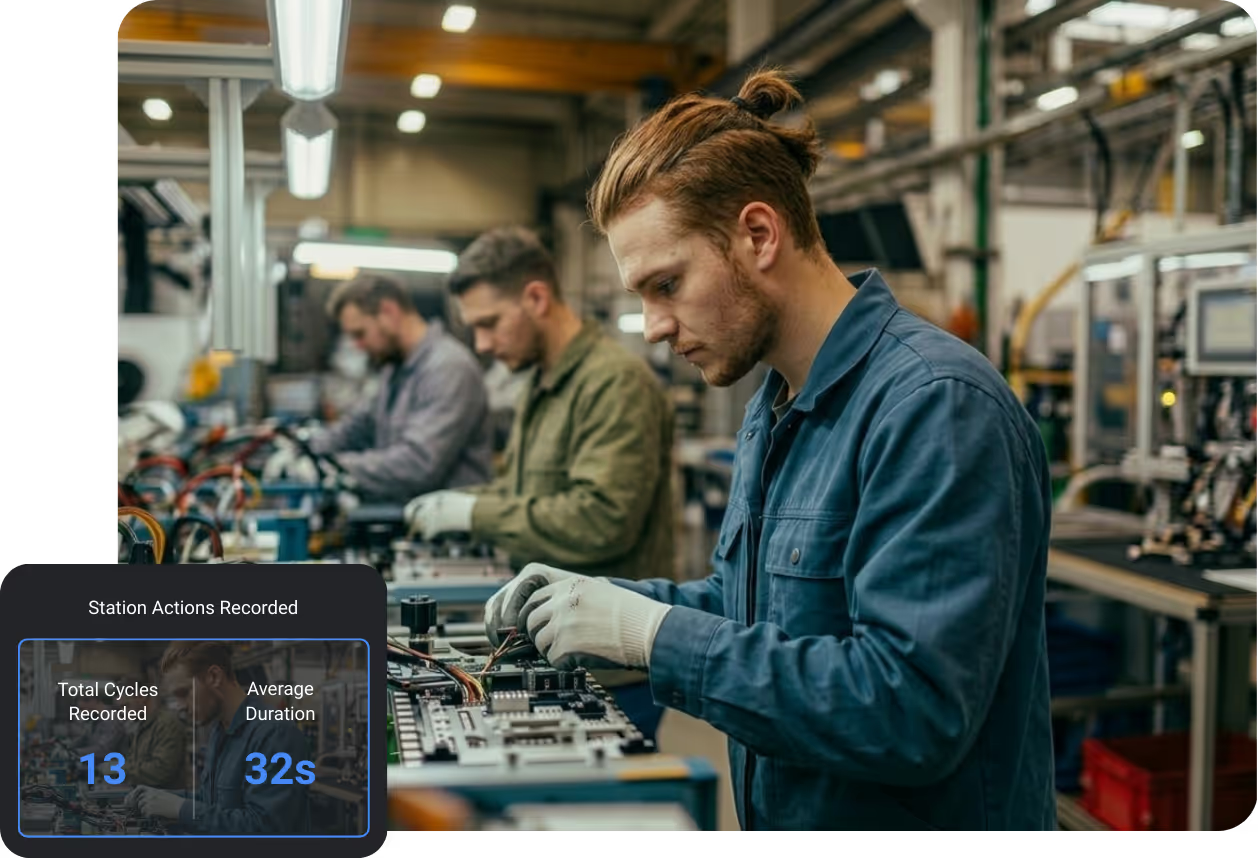
Advanced Visual Language Models analyze human work, classifying tasks, motion, and timing to reveal opportunities for operational improvement.
Automatically measure how long each step takes across operators and stations. Understand cycle times, delays, and variation without manual stopwatch studies or shadowing operators.
Analyze task sequences, motion, and timing. Reveal waste, identify non-value-added work, and understand how productive and unproductive activities impact performance.
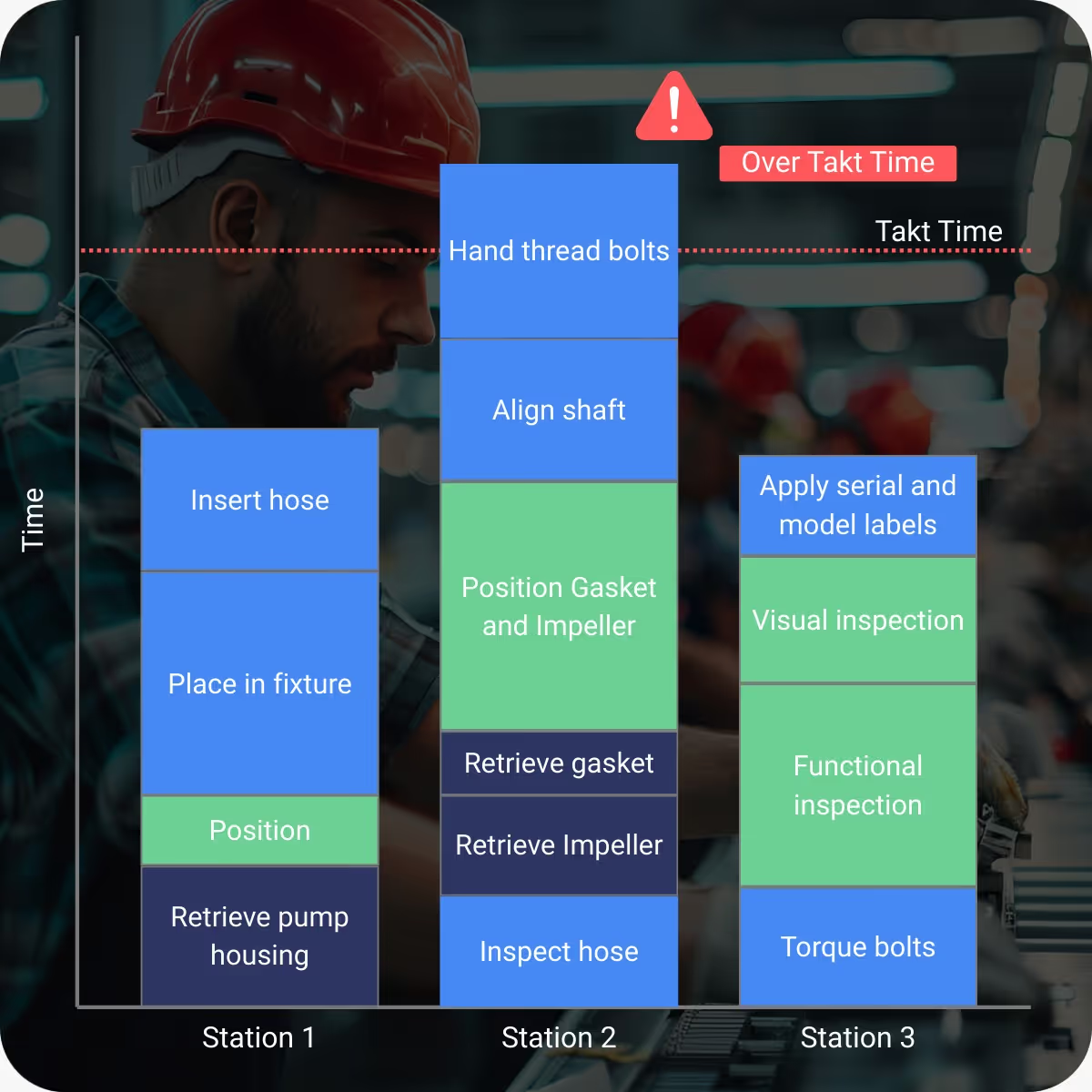
Continuous operational insights help teams compare cycle times against takt, balance work across stations, improve flow, and remove bottlenecks using proven Lean manufacturing principles.

Capture, measure, and analyze real production work in one platform to generate insights that improve execution and operational performance.

Physical AI models combine visual perception and language reasoning to understand human work, measure tasks, and analyze execution in real time.

Factory floor deployments are supported by an ecosystem of hardware, AI, and software partners, including NVIDIA and Zebra Technologies.

Expert onboarding and implementation support to ensure rapid deployment, adoption, and measurable operational results.
Time and Motion AI uses AI to automatically measure how work is performed. By analyzing tasks, motion, and timing across real production workflows, organizations can identify inefficiencies, understand variation in cycle times, and improve operational performance.
Unlike traditional studies that rely on short observation periods by people, AI enables continuous analysis of real work execution.
An AI time study uses artificial intelligence and computer vision to measure how work is performed in real operational environments. Instead of manual observation with stopwatches, AI analyzes tasks, motion patterns, and cycle times directly from production workflows.
This allows teams to generate time study insights faster and across much larger datasets than traditional approaches.
Traditional time studies rely on manual observation, stopwatches, and spreadsheets. They typically analyze small samples of work and require significant manual effort.
AI time studies use computer vision and AI Visual Language Models to automatically analyze workflows. This allows organizations to measure task timing, analyze motion, and evaluate process variation continuously across operators and shifts.
AI-based time and motion analysis can provide insights such as:
These insights support Lean manufacturing initiatives, Kaizen activities, and line balancing efforts.
Lean improvement methods rely on understanding how work is performed. AI can continuously analyze production workflows to identify inefficiencies, variation, and bottlenecks.
By automatically measuring task timing and workflow execution, AI helps teams generate insights that support Kaizen, Yamazumi analysis, and other continuous improvement practices.
Many video analytics systems focus on object detection or on monitoring safety and compliance events.
DeepHow focuses on understanding how humans and operators execute work. The platform analyzes task sequences, motion, and timing to measure how work is performed and generate operational insights that support continuous improvement.
DeepHow also integrates operational knowledge, instructions, and AI analysis into one platform designed specifically for frontline operations.
No. Time & Motion AI enhances traditional industrial engineering practices.
Platforms like DeepHow provide continuous operational data that engineers can use to support Kaizen initiatives, line balancing, workflow optimization, and process improvement. AI expands the scale and accuracy of time-motion study methods rather than replacing them.
No. Work analysis systems such as DeepHow are designed to analyze existing workflows without requiring operators to manually record data or change how they perform their tasks.
The platform analyzes work execution using supported cameras and AI models while operators continue performing their normal work.
Physical AI refers to AI systems that understand and analyze activity within real-world environments.
DeepHow applies Physical AI to manufacturing to understand, reason, and verify how operators perform actions on the factory floor. This allows organizations to measure work execution, generate operational insights, and continuously improve production processes.